
MYP 4 Unit Overview. Art and Illusion
Here’s a revised version that smooths out the language for clarity and flow:
Unit Overview: Exploring Illusion in Art
Global Context: Scientific and Technical Innovation
Exploration: Mathematical Puzzles, Principles, and Discoveries
This page contains the full unit outline, which teachers can use as is or adapt to suit their needs. The activities and resource links provided will guide the students through the unit. I’ve included this particular unit due to its popularity among students!
Unit Inspiration:
This unit explores the concept of illusion, a technique widely used in art to manipulate composition and depth. By examining various ways to create illusions, students will be inspired to incorporate these techniques into their own artwork, while also developing their broader knowledge of art.
Key Concept: Aesthetics
Related Concept: Representation
Global Context: Scientific and Technical Innovation
Exploration: Mathematical Puzzles, Principles, and Discoveries
Statement of Inquiry:
Artists can manipulate artistic techniques to create and express the concept of illusion.
Time: 22 Hours
Inquiry Questions:
Factual:
- What art knowledge is necessary to create an illusion in an artwork?
- What specific art movements are most associated with the exploration of illusion?
- What materials and resources are recommended for creating illusions in art?
Conceptual:
- Which art movements have utilized the concept of illusion?
Debatable:
- Do audiences always perceive the same idea or meaning when viewing an artwork?
Art-Making Content, Skills, and Knowledge:
- Drawing: line, shape, shading, and Op Art
- Creating two images in one picture frame (overlapping imagery)
- Positive and negative shapes to create dual imagery
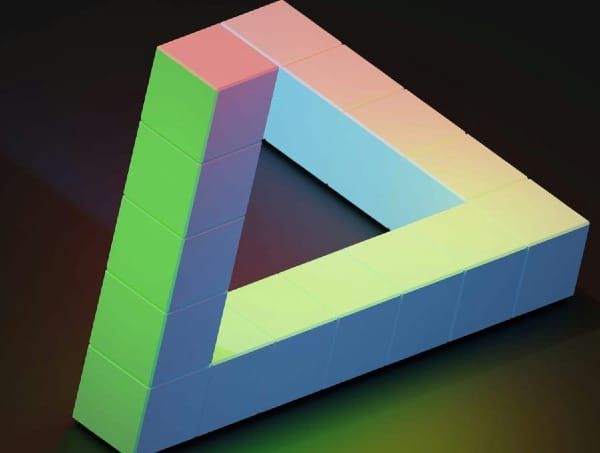
- Impossible shapes (e.g., Penrose triangle)
- Manipulating composition and depth of field
- Overlapping objects for illusory effects
- Distorted grids and anamorphic illusions
- Hidden images and visual puzzles
- Experiments with scale and depth
- Use of mathematics in creating repeated patterns and visual structures
Key Concept: Aesthetics
Aesthetics involves the study of beauty, taste, and the creation and perception of art. It fosters the ability to critically appreciate and analyze works of art, culture, and nature. While aesthetic principles and perceptions of beauty often vary across cultures, the concept is broad, encompassing not only traditional ideas of beauty but also diverse cultural perspectives and sensory experiences.
(IB MYP Art Guide 2022, pg. 24)
Assessment:
Resources
Example of Op ArtistsGot it! Here's the information restructured into a clear, spaced-out table format for you: All tasks have specific due dates listed on a timeline for the entire unit.
Investigation starting point...
Artists
Op Art Pioneers
- Bridget Riley
- Victor Vasarely
- Jesús Rafael Soto
- Richard Anuszkiewicz
- Omar Rayo
Artists Known for Illusion
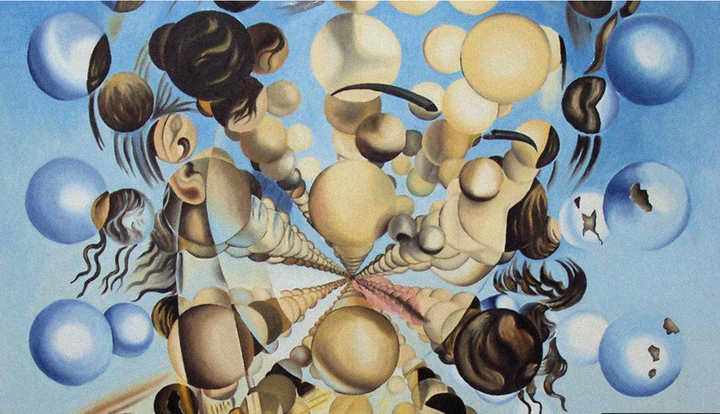
- Salvador Dalí (Surrealism)
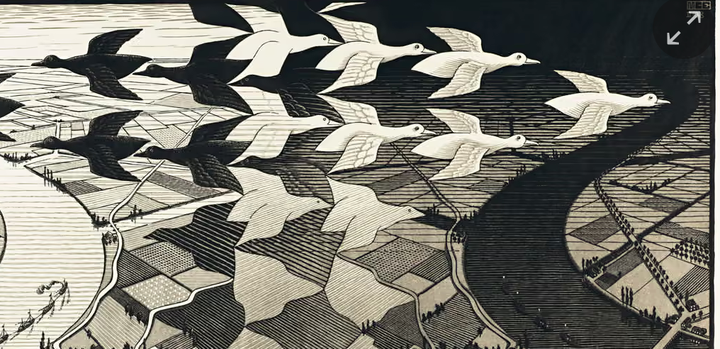
- M.C. Escher (Mathematical and Visual Illusions)
- Giuseppe Arcimboldo (Mannerism, Known for his Illusionary Portraits)
Contemporary Artists
- Julian Voss-Andreae (Sculpture and Optical Illusions)
- David Zinn (Street Art and Illusions)
- Edgar Müller (Street Art and 3D Illusions)
- Regina Silveira (Installation Art and Optical Illusions)
- Tauba Auerbach (Contemporary Art, Geometry, and Illusion)
- Aakash Nihalani (Street Art, Geometric Shapes, and Optical Illusions)
- Felice Varini (Optical Illusion Installations)
Other Resources
Op Art
TATE - What is Op Art?
Explore Op Art on Tate
M.C. Escher
BBC - M.C. Escher
Read about M.C. Escher
Google Arts & Culture
The Illusion of Space and Depth
Explore Google Arts and Culture: Art 110 - The Illusion of Space and Depth
Comments ()